Bird Watching
Aninda Sardar

ong before there was a festival, the Hornbill was a bird. A family of birds, in fact, featuring no less than nine different types. I guess having a father-in-law who is into birding helps with this sort of nerdy information. The kind of data that would either excite a biologist or folks in camo with binoculars swinging around their necks as they crane for a glimpse of plumage. Presumably, somewhere in one of the northeastern states of India, which is where these birds are mostly found. If you push me for an exact location then I’ll probably tell you Nagaland. And that’s a curious thing really. Because the Hornbill, any of those nine, is… hold your breath… not the state bird of Nagaland. That honour goes to the Blyth’s tragopan, which, if you spot one, looks nothing like any hornbill on the planet. Begs the question, why then is Nagaland’s biggest annual cultural festival named the Hornbill Festival?
Whatever the reasons for that nomenclature, there is no denying that the Hornbill Festival is abso-bloody-lutely spectacular. It’s a mega cultural event that showcases the incredible wealth of diversity that is Naga culture. From clothing and textile and crafts, each one unique to each of the many tribes that make up the population of Nagaland, to food and music and dance, the festival is vibrant beyond imagination.
Naturally, it’s a huge tourist draw; the Hornbill Festival on an average sees lakhs of footfalls, including tens of thousands of domestic tourists and thousands of foreign visitors. In 2025, the 35 participants of the Hornbill Escape that was organised by Mahindra Adventure were a part of the 2,14,493 people who visited the 10-day event and were among the 56,431 people who travelled to Nagaland from different corners of the country. The rest comprised over a lakh and a half local visitors and over 2,500 people who got a visa and flew into India to witness this tremendous event. Apart from being such an important tourist attraction and an economic generator, the Hornbill Festival is also significant because it provides impetus to cultural conservation. It’s important enough for the government of Nagaland to have created a permanent heritage village at Kisama, not too far from the state capital of Kohima. To witness that, 35 people drove 12 Mahindras from Guwahati to Kohima and back.
The road from Guwahati doesn’t sound difficult. You start off eastwards towards the famed Kaziranga National Park. Nearly two-thirds of the way to Kaziranga, you hang a right at Nagaon and head south-east to Dimapur and then on to Kohima. A round trip adds up to a little over 750km, depending on which part of Guwahati one has started from and how much one travels around Kohima. The road to Kaziranga and then on to Dimapur is a fairly straightforward highway cutting mostly through the plains. Dimapur is actually at the foothills and is the most obvious point for a break in the journey. The road from Dimapur to Kohima isn’t a long one but can be arduous. The region is prone to landslides and the highway as a result is less than optimal.
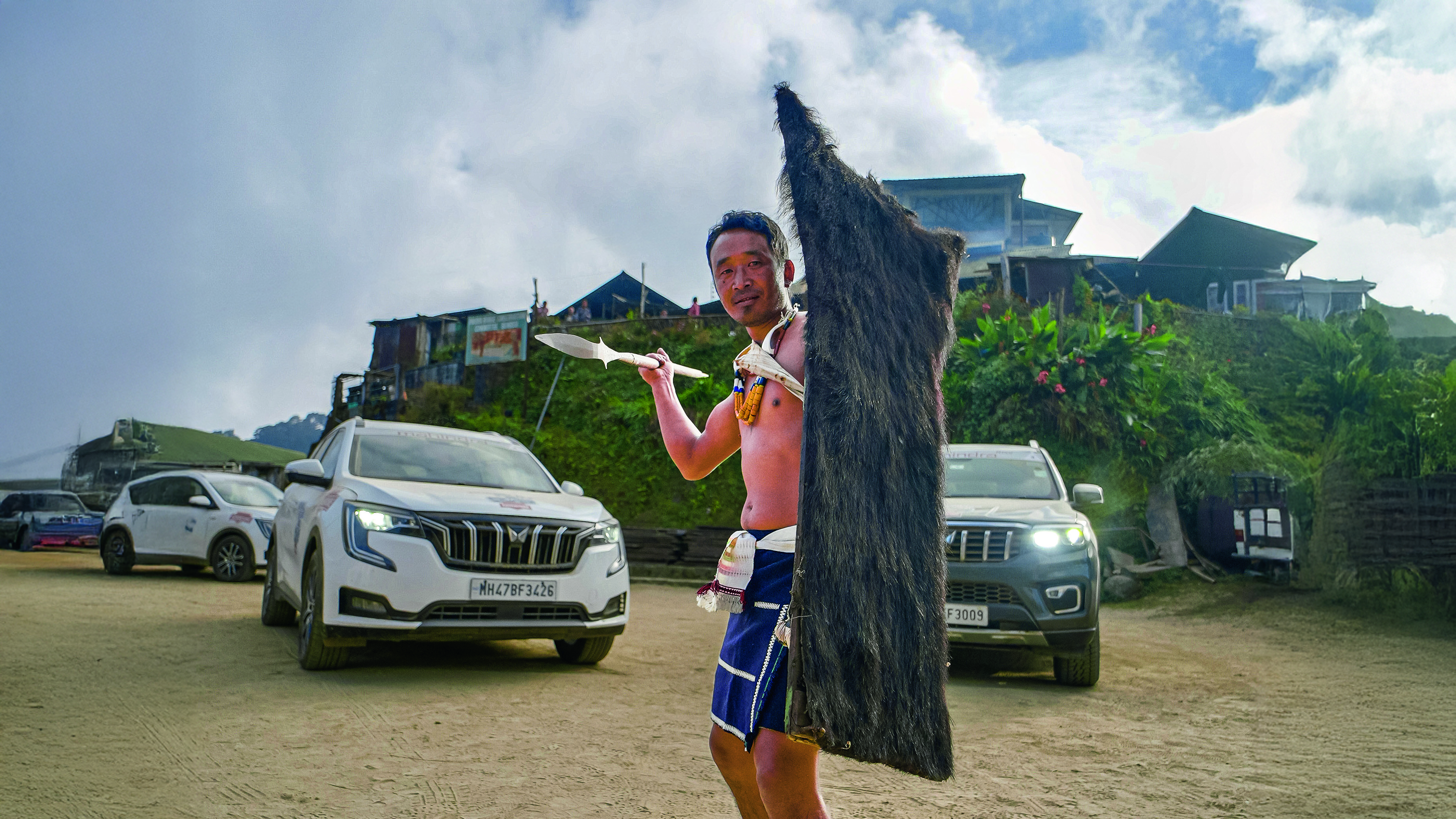

But if culture and adventure are your things, then the journey is well worth it. Once you reach Kohima and then venture into Kisama, it’s like being portalled into a different world. People sporting vibrant red Ao Naga shawls, or boar tusk embellished headgear or musket toting tribals, they’re all here. Along with the peculiar accoutrements of their specific culture, ever ready to show and tell anyone who cares to be a bit more curious than the wide-eyed traveller. They look fierce but are genuinely gentle souls who are touched by and will touch you with their simple gestures and casual honesty.
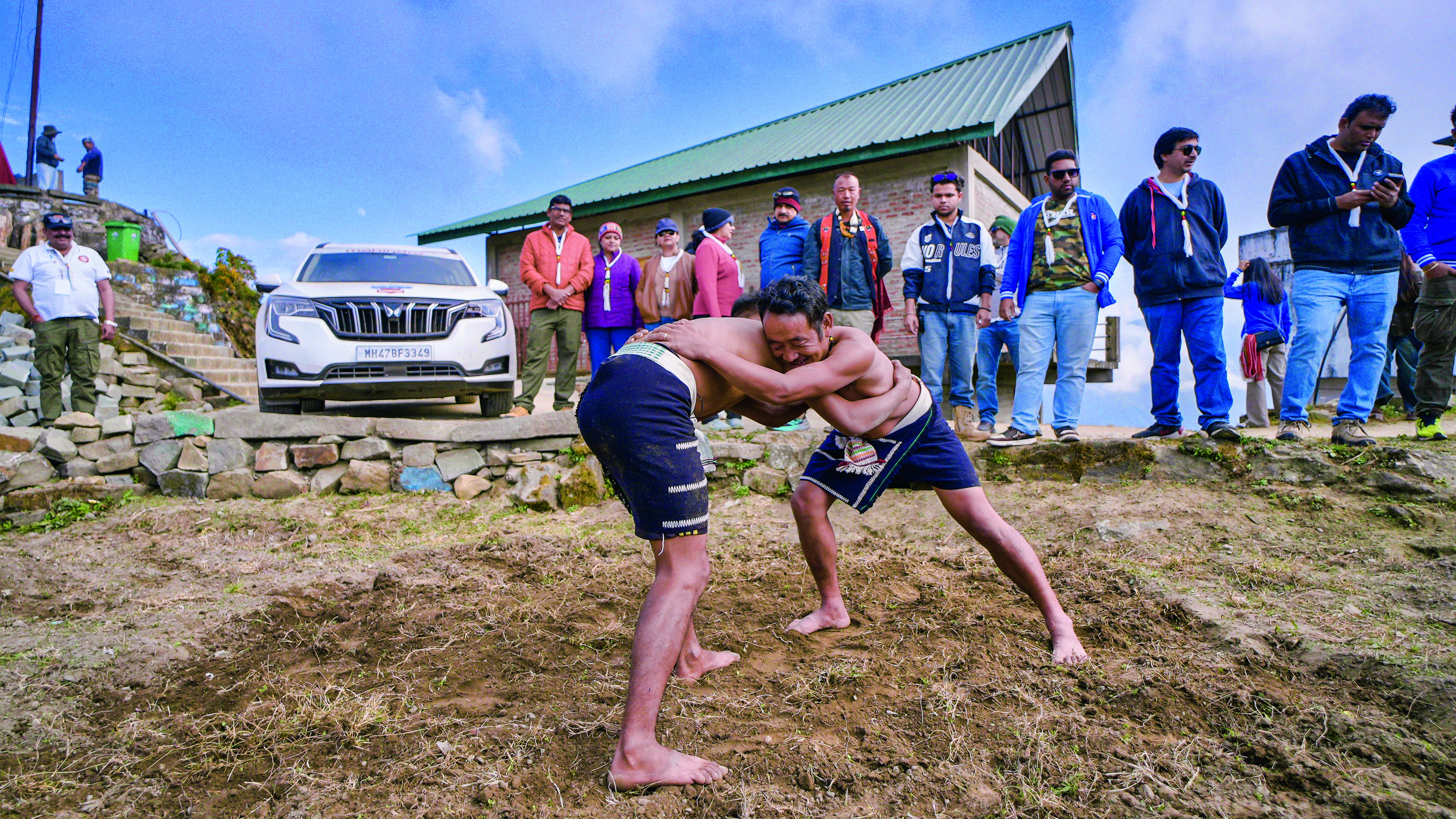
The participants of the Hornbill Escape got to witness the people and their culture up close. One of the things they saw was Kene, the traditional wrestling form of Nagaland and an identity marker of the people. What cultural conservationists, and UNESCO, would call intangible cultural heritage. It involves a unique cross-grip where the wrestler tries to get a grip on the opponent’s waistband and plonk him to the ground. While the full contact sport was too much for any of the participants to try their luck with, they tried their hand at the traditional shot put-like Chugi. This one is played exactly like shot put but instead of the metal ball of the modern sport, Chugi involves throwing a heavy roundish rock, sometimes weighing up to 20 kilos, as far as you can. There is also plenty of music with the Hornbill Music Festival being organised as part of the whole gig and food. Lots and lots of food. Crafts too, with each tribe bringing their unique skills to bear. To immerse, indulge and experience, there was plenty for the folks who went on the Hornbill Escape to the Hornbill Festival.